
Welcome to the latest updates from IQLS!
IQLS News

Global Laboratory Leadership Programme (GLLP) Launches in Armenia
The Global Laboratory Leadership Programme (GLLP) was officially launched in Yerevan, Armenia on March 12, 2021 with IQLS on-site to lead and oversee the introduction of the program, including Chief Scientific Officer Antoine Pierson, National Laboratory Specialist Zaruhi Davtyan and International Laboratory Specialist Arsen Zakaryan. The goal of the meeting was to plan the local roll-out of the GLLP, identifying mentoring and improvement projects for Armenia. Agenda Highlights To start, IQLS presented an introduction to the GLLP to attendees, which was then followed by discussions on the Terms of Reference for the GLLP Armenia Working Group. The yearly GLLP work plan was also addressed, and an agreement on all points was reached with deadlines updated. A report including the review of recent human and veterinary laboratory system assessments was reviewed to identify prevailing weaknesses, and these results were used to prioritize GLLP competencies. Participants & Key Stakeholders Participants from across Armenian Ministries and institutions were present, including:- The Ministry of Health (MOH),
- The Ministry of Economy (MOE),
- The National Center for Disease Control and Prevention (NCDCP),
- The Food Safety Inspectorate (FSI) of Republic of Armenia,
- Yerevan State Medical University (YSMU),
- Armenian National Agrarian University (ANAU), and
- The National Institute of Health (NIH).
- Deputy Minister of Health Lena Nanushyan,
- Deputy Minister of Economy Tigran Gabrielyan,
- Head of FSI Georgi Avetisyan,
- Rector of ANAU Vardan Urutyan,
- Director of NIH Alexandr Bazarchyan, and
- Vice Rectors of YSMU Garnik Avetisyan and Konstantin Yenkoyan.

IQLS Opens Office In Burkina Faso
IQLS is pleased to announce it has opened an office in Ouagadougou, Burkina Faso to best support new and ongoing projects and partners in Africa. The main mission and role of this new office will be to oversee and manage activities performed in Africa under the CDC Cooperative Agreement awarded to IQLS in September 2020. IQLS Africa will implement activities specifically in Burkina Faso, Liberia and Ghana, but also across all of Africa. A dedicated team of 5 will be based in the IQLS Africa office, including:- Dr. Abdoulaye Nikiéma – as International Senior Laboratory Specialist in the role of Chief Executive Officer of IQLS Africa.
- Dr. André Coulibaly – as National Laboratory Specialist implementing the GLLP program in Burkina Faso and Togo as well as creating and strengthening national EQA programs and providing project management linked to laboratory activities.
- Dr. Yiyé A. Nagalo – as Laboratory Specialist managing all EQA activities for IQLS and Quality Management for IQLS Africa.
- Aïda Barro – as Project Coordinator in charge of organizing the implementation of IQLS projects and activities in Africa as well as facilitating the working relationship between technical referents, consultants, providers, sub-contractors, clients/funders, beneficiaries and IQLS Headquarters.
- Yasmina Triandé – as Administrative & Logistics Assistant handling procurement and missions organization, and also maintaining the liaison between suppliers, IQLS Africa and IQLS headquarters in Lyon.


AMR Control Program Activity Evaluation Framework in Zimbabwe
From 19 to 22 November 2019, IQLS participated in an Antimicrobial Resistance (AMR) country mission to Zimbabwe to help establish guidance for monitoring and evaluation framework related to the national action plan. The mission team included IQLS Senior Lab Specialist Obert Kachuwaire plus 2 consultants from Epiconcept as well as representatives from WHO, FAO and OIE. Meetings were held with various stakeholders, including the multisector national AMR core group, the Ministry of Health, national reference laboratories (human, veterinary and environment) and academia. The guidance includes best-practice examples, identifies gaps in the current framework and proposes alternative indicators. The key objectives were to:- Assess the feasibility of countries collecting data on the indicators of the Tripartite M&E framework and those that are being suggested to track AMR within the Sustainable Development Goals (SDGs)
- Identify data sources and approaches to better track how antimicrobials are used
- Identify potential country-owned targets
- Develop guidance (primarily for low- and middle-income countries) on how to develop an appropriate and useful AMR results framework/monitoring system that will help strengthen the links between AMR and the broader human and animal health systems

Laboratory Strengthening Training for One Health Specialists in Armenia
IQLS is pleased to have assisted the Government of Armenia (GoAM) in improving laboratory networks, biosafety, biosecurity, risk management and increasing quality management systems in both human and veterinary laboratories across the country. This project was supported by ISTC (International Science and technical Center, Astana Kazakhstan) under DTRA funding (Defense Threat Reduction Agency, USA). The overall project goal was to develop systems for detecting, diagnosing, reporting and securing pathogens, both dangerous pathogens (EDPs) and non-EDPs by implementing “One-Health” principles and using a syndromic approach. After an initial assessment of laboratories, staff competencies and communication, IQLS provided theoretical and hands-on training sessions to a total of 443 laboratory specialists from 44 laboratories, including 7 public health, 6 veterinary, and 31 hospital labs. Workshops covered the following topics:- Sample transportation and flow
- Laboratory Quality Management Systems
- Implementation of a reference and referral systemStaff competencies in laboratories
- Design and implementation of diagnostic algorithms and syndromic approach
- Laboratory tiered-level systems
- Equipment maintenance and management
- Laboratory diagnostics techniques (bacteriology, serology and molecular biology)
- Implementation of a national External Quality Assessment program, participation to International EQA programs for reference labs
- Biosafety and biosecurity
- Human lab specialists: Julius Manjangwa (on-site full time), Obert Kachuwaire, Antoine Pierson, Arnaud Orelle, Pauline Lévigne, Cécile Guillerme, Frédéric Marti, Eric Garnotel and Coosje Tuijn
- Veterinary/food safety lab specialists: Zara Davtyan (on-site full time), Arsen Zakaryan, Sylvain Naulot and Jérôme Chatard
- Quality Manager: Marisha Chandrashekha
- Staff for project management, logistics and finance support

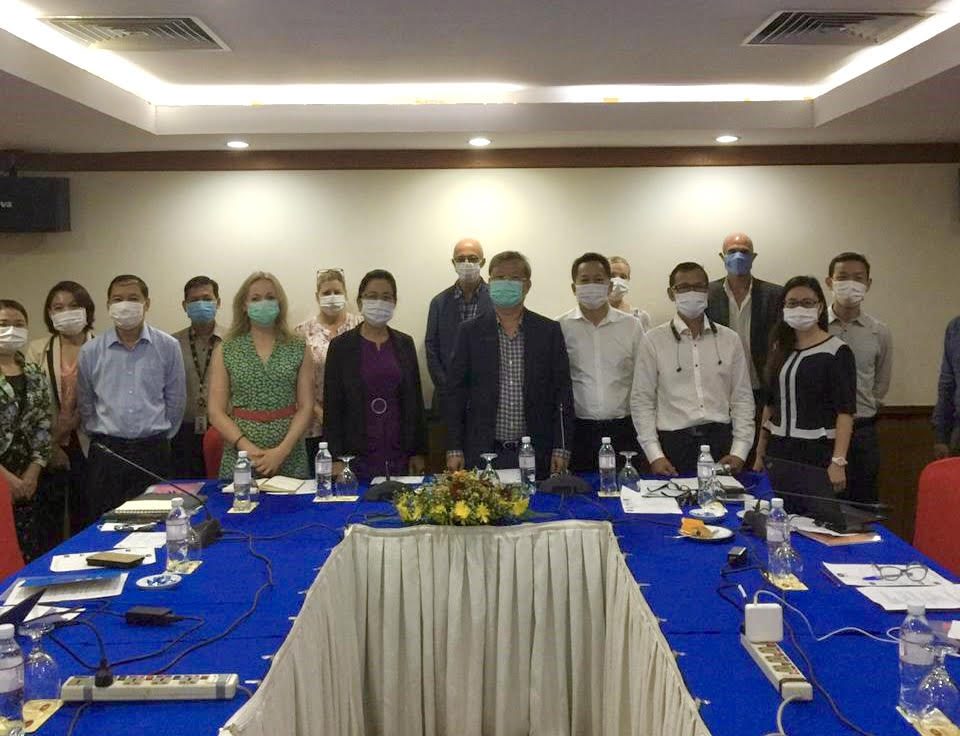
SEALAB Project For Strengthening Laboratory Systems Launches in Cambodia
The SEALAB project to strengthen laboratory networks in Southeast Asia has officially launched with the first steering committee meeting held on 7 August 2020 in Phnom Penh, Cambodia. In partnership with Fondation Mérieux, IQLS and Australian non-profit organization NRL, the SEALAB project aims to strengthen national health systems in Cambodia, Laos and Myanmar to build capacity for responding to infectious diseases that could pose risks. SEALAB is supported by the Australian Department of Foreign Affairs and Trade (DFAT). The purpose of the meeting was to allow key project stakeholders to discuss strategies and ask questions related to implementing SEALAB in Cambodia. In attendance were representatives from the following organizations:- Cambodia’s Ministry of Health and the Ministry of Agriculture, Forestry and Fisheries
- University of Health Sciences (UHS)
- Council for the Development of Cambodia (CDC)
- Department of International Cooperation (DIC)
- Bureau of Medical Laboratory Services (BMLS)
- Department of Hospital Science DHS
- Defense Threat Reduction Agency – Biological Threat Reduction Program (DTRA-BTRP)
- Food and Agriculture Organization Cambodia
- WHO
- NAMRU-2 (Naval Medical Research Unit Two)
- Sihanouk Hospital Center of HOPE
- Diagnostic Microbiology Development Program (DMDP)
- US CDC (Center for Disease Control and Prevention)
- Korean International Cooperation Agency (KOICA)
- Population Service International
- Australian Embassy in Cambodia
 (photo credit: Fondation Mérieux)
IQLS looses a friend and collaborator
We are very sad to announce that our friend and colleague, Dragan Toroman, senior IT expert specialized in medical IT, passed away in Belgrade, Serbia on 13/04/20, victim of Covid19 infection. He was only 50. I met Dragan in 2005 when leading EU-funded project “Strengthening the Services of Public Health Laboratories in Serbia” where he was leading IT activities during the 3 years of the project. After, Dragan collaborated several times with IQLS, in Vietnam (implementation of a simple TB/HIV Laboratory Information Management System), in Malaysia, few times in France (last project one year ago with MSF on minilab LIMS). Beyond his IT capacities (Head of Computer Science Department at Petnica University in Serbia), and pragmatism (always considering difficulties as interesting challenges to overcome) Dragan was a joyful colleague, with a great sense of humour and sarcasm, always humble with beneficiaries and partners. We are all conveying our thoughts to Vesna and Lidija, his wife and daughter, reminding them that we stand ready when needed. Dragan, I will miss you, our work, our moments of fun. Rest in peace brate! Antoine For those interested, a small article from Republika newspaper (in Serbian) describes his career: https://www.republika.rs/hronika/hronika/199703/odlazak-legende-istrazivacke-stanice-petnica-preminuo-dragan-toroman
IQLS communication on Covid 19 outbreak
Dear collaborators, partners and beneficiaries, We are all shocked by this worldwide outbreak that more and more countries are facing. As you know, France was one of the first European countries impacted and is still under a very strict quarantine law. Within a few days, IQLS had to adapt and all staff based in Lyon are now working 100% from home but continuing to support countries and projects remotely. Due to this unprecedented situation, all our international travel has been suspended, but our teams based abroad (Burkina Faso, Cambodia, Canada, Ghana, Liberia) are continuing activities as long as their local authorities allow it. If not, they will work remotely, as is already the case in Armenia. IQLS would like to contribute to this crisis. We have uploaded our MERS CoV laboratory outbreak simulation exercise, which was organized at our premises in France in July 2019 for Liberian and Ghanaian laboratory specialists and epidemiologists. All attendees told us it has been very useful when preparing for Covid19. Download link: www.iqls.net/docs/Lab_outbreak_simulation_exercise_MERS_IQLS_JUL2019.zip Should you have any questions or concerns about this module, email Antoine Pierson, pierson@iqls.net. We are also developing new training modules or trying to transfer some of our face-to-face modules into distance learning. As soon as a finalized product is released, we will keep you informed. We would like to renew our commitment to all partners and beneficiaries as more than ever public health improvement is a requirement worldwide. Should you need any specific support, feel free to communicate with us. Please take care and stay inside. IQLS Team Illustration courtesy of Santé publique France https://www.santepubliquefrance.fr/
Laboratory Training for ISO 9001 Certification in Tamale and Sekondi RPHLs, Ghana
On-site training for ISO 9001 standards was conducted by IQLS in two RPHLs (Regional Public Health Laboratories) in Ghana. The first session took place in Tamale on 25 to 28 February 2020, and the second session was in Sekondi on 2 to 5 March 2020. The training is part of the CDC/KOICA Ghana QMS implementation project. The objectives of the training were to:- Introduce ISO 9001:2015 standard requirements
- Understand process approach
- Develop the minimum documents required
- Apply principles learned and create drafts during the workshops
- Define process indicators
- Checklist for self-assessment
- Define a short term plan of action


Helping Prepare for Coronavirus at NPHIL in Monrovia, Liberia
In collaboration with the Center for Disease Control and Prevention (CDC), IQLS conducted a risk and needs assessment for COVID-19 outbreak preparedness at the National Public Health Institute of Liberia (NPHIL)'s virology/molecular biology laboratory in Monrovia, Liberia. The mission took place on 28 to 31 January 2020, and was led by Dr. Antoine Pierson, IQLS Chief Scientific Officer. A checklist was used for this purpose, adapted by IQLS and based on the WHO checklist for the MERS-CoV outbreak in 2012. A 3-week, short-term plan of action was prepared to help deal with eventual cases of Coronavirus in Liberia. With over 50 attendees involved, the plan was presented to all participating stakeholders in response and preparedness, including the following organizations:- NPHIL (lead)
- Ministry of Health/NDD, Representative from the Office of the Vice President
- WHO
- FAO
- UNICEF
- US CDC
- USAID/IDDS,
- GIZ
- Partners in Health (PIH)
- Riders for Health International (RFHI)
- IQLS
- WASH
- MRI Global
 At the same time, IQLS Senior Lab Specialist Dr. Shruti Malik, based full time in Monrovia, organized a one day simulation exercise on the MERS outbreak, another Coronavirus that created an outbreak in 2012, developed by IQLS.
In total, 12 regional laboratory specialists participated and each received simulation workshop materials.
At the same time, IQLS Senior Lab Specialist Dr. Shruti Malik, based full time in Monrovia, organized a one day simulation exercise on the MERS outbreak, another Coronavirus that created an outbreak in 2012, developed by IQLS.
In total, 12 regional laboratory specialists participated and each received simulation workshop materials.
 Example of workshop material:


Laboratory Assessment Training in Sri Lanka
On 2 to 6 December 2019, IQLS organized an on-site laboratory assessment training for 12 participants from the Ministry of Health Nutrition and Indigenous Medicine in Colombo, Sri Lanka. The training focused on:- Managing and preparing laboratory facility assessment data
- Using GIS in the field of health
- Reviewing the assessment process
- Developing draft tiered levels to be included in the facility assessment tool
- Carrying out assessments for 2 laboratories


Supporting GLLP Mentees and NPHIL Officials in Monrovia, Liberia
IQLS is pleased to provide permanent support for mentees in the Global Laboratory Leadership Programme (GLLP) and to officials at the National Public Health Institute of Liberia (NPHIL) in Monrovia. The project is run in collaboration with the Center for Disease Control and Prevention (CDC), and marks an extension to an agreement for IQLS laboratory support to CDC. GLLP is promoted by 6 partners, including the CDC, WHO, FAO, ECDC, OIE and APHL. IQLS International Lab Specialist and Bacteriologist Dr. Shruti Malik is working full-time on the project, based in Monrovia, from 1 October 2019 to 30 September 2020.
Laboratory System Training and HIV Early Infant Diagnosis in Senegal
In collaboration with IRESSEF, UNICEF HQ and UNICEF WCARO, IQLS facilitated a training workshop on 16 to 27 September 2019 in Saly, Senegal, on the topics of 1) national laboratory system strengthening and 2) the implementation of HIV early infant diagnosis and viral load point-of-care testing services in West and Central Africa. Training the first week was focused on strengthening national laboratory systems, with 11 government representatives present from the 10 project countries: Burkina Faso, Cape Verde, Central African Republic, Chad, Congo, Equatorial Guinea, Gabon, Ghana, Mali, and Nigeria. Training the second week focused on scaling up of point-of-care testing services and integration into paediatric, maternal, neonatal and infant care programs. UNICEF country offices HIV focal points joined this training. Participants enjoyed a hands-on format, including presentations, work groups and case studies that were facilitated by a rich panel of experts were present from UNICEF, IRESSEF, EGPAF, UNAIDS, IRD, and WHO. Senior Lab Specialists Dr. Abdoulaye Nikièma and Obert Kachuwaire from IQLS were key facilitators. During the two week sessions, it came to light that national laboratory systems face huge gaps and the region is lagging behind in terms of EID diagnosis and paediatric treatment. Participants agreed on a set of recommendations to address these challenges and help improve ongoing scale-up of HIV EID and VL. The next step will be to validate national operational plans with key stakeholders.

Training on Biosafety and Biorisk Management for Muraz Center, Burkina Faso
From 25th February to 1st March 2019, Arnaud Orelle and Sébastien Allix – Le Guen (Consultant, LABSCIENCE) organized a 5-day biosafety, biosecurity and risk assessment training in Ouagadougou, Burkina Faso for the staff of the Muraz Center (Muraz). The project… Read more
Practical roadmap for ISO15189 accreditation conference in Almaty, Kazakhstan, March 2019
Dr. Antoine Pierson has been invited by Scientific center for dermatology and infectious diseases to participate to a conference on ISO15189 accreditation in Almaty, Kazakhstan, held in March 2019. A talk on practical roadmap for laboratory accreditation was delivered, and… Read more
IQLS Staff received IATA Certification on Dangerous Goods, including Infectious Substances
Alexandra Dubouchet, Pauline Lévigne and Arnaud Orelle attended IATA training on Dangerous Good Regulations (Initial – Category 6) in Geneva IATA Training center in November. The IATA Dangerous Goods Regulations (DGR – 60th Edition) training aimed at preparing, handling or… Read more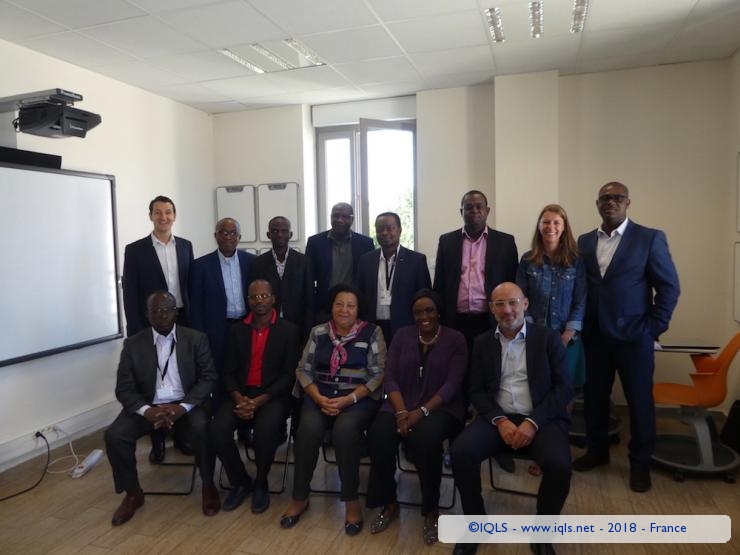
Updated IQLS and Epiconcept Training Offer (EN/FR/RU)
IQLS is glad to present you its updated training offer for laboratories and laboratory systems. We also use this occasion to present you Epiconcept epidemiology department training offer (IQLS sister company). IQLS Training Offer (English/French/Russian) Epiconcept Training Offer (English/French/Russian) Looking forward to… Read more
Diagnostic algorithms workshop in Yerevan, Armenia
Early October, Dr. Eric Garnotel, head of Laveran military hospital laboratory (Marseille, France) and Dr. Pauline Lévigne (IQLS) worked with Armenian Infectious diseases specialists in order to develop diagnostic algorithms for outbreak response, according to the syndromic approach recommended by… Read more
ISO9001 and biosafety assessment at Central Reference Laboratory in Almaty, Kazakhstan
From September 17th to September 21th, Drs Antoine Pierson and Pauline Lévigne and Dr Arsen Zakaryan, Doctor of Veterinary medecine and lab specialist conducted an asssessment of the 3 Laboratory Departments hosted in the Central Reference LAboratory of Almaty: KSCQZD… Read more
Training on Biosafety and Biorisk Management for BSL3, Addis Ababa, Ethiopia
IQLS organized a training workshop on Biosafety and Biorisk management for BSL 3 Laboratory Researchers and Laboratory personnel at the Ethiopian Public health Institute. The training was conducted from the 27th to the 30thof August 2018. The training focused on… Read more
Whonet training with John Stelling at DGAP, Ouagadougou, Burkina Faso
The purpose of this mission was to strengthen the skills in antimicrobial resistance data management of the staff of 14 sentinel laboratories with the WHONET software developed by the WHO Collaborating Centre for Surveillance of Antimicrobial Resistance ( http://www.whonet.org/). This… Read more
©2010 - 2026 IQLS - Integrated Quality Laboratory Services. All Rights Reserved. If you are not part of the solution, you are part of the problem.