
Welcome to the latest updates from IQLS!
IQLS News

RDS: Biosafety cabinet maintenance training
Under the CDC Global Health Security Agenda initiative, IQLS is implementing a Regional Diagnostic Strengthening project in Southeast Asia. In collaboration with CDC Thailand, Regional Public Health Laboratory Network (RPHLN), and Department of Medical Sciences, Ministry of Public Health, Thailand, our IQLS Thailand team (Dr. Shruti Malik and Ms. Ananya Muangkong) organized a Biosafety Cabinet Use and Maintenance (BSC) training between 6-8 September technically supported by ESCO Lifesciences. The workshop aimed to equip laboratory personnel with the necessary skills and knowledge to use and perform daily basic maintenance of BSCs effectively. The learning objectives comprised of:- Describing the different types of biosafety cabinets and their components
- Understanding the standard operating procedures for cabinet use and maintenance
- Developing skills for regular cleaning and decontamination of cabinet
- Identifying and troubleshooting common issues related to biosafety cabinets.
- Reading and interpreting BSC certification reports

IQLS webinar series on Laboratory Management: Financial management
IQLS is organizing a four-part Laboratory Management webinar series focusing on the core competencies and skills required for laboratory management. It is conducted within the Regional Diagnostic Strengthening initiative, supported by the U.S. CDC. This session on Financial Management will be held on 27 July 2023, 3.00-5:00 pm ICT (Bangkok Time). It will focus on the concepts, tools and processes related to Laboratory Management. It will be an interactive session discussing the elements of a laboratory budget, budgeting processes and various types of cost analyses conducted with examples. The webinar will review the financial audit process and discuss the concept of financial sustainability. IQLS speaker will be our Senior Laboratory & QMS Specialist, Dr. Abdoulaye Nikièma, and we welcome our guest speaker, Dr. Filip Claes, Regional Laboratory Coordinator from FAO, Thailand Learning objectives of the session: After completing the webinar, participants will be able to:- Classify various types of budgets, budgeting processes and costs.
- Describe the different types of cost analyses conducted to guide resource decisions.
- Understand the purpose and features of a financial audit.
- Explain the importance of a financial sustainability plan.

IQLS abstract presentation at ISWAVLD 2023 on Brucella DTS
IQLS will be participating at the International Symposium of the World Association of Veterinary Laboratories Diagnosticians (ISWAVLD) taking place in Lyon, France, from June 29 to July 1. ISWAVLD is a renowned meeting place for all veterinary diagnostic laboratories, biologists, veterinarians and other scientists involved in laboratory diagnostics, bringing together more than 500 participants biannually. In addition to presenting the latest innovations around diagnostics in all areas of animal and environmental health, ISWAVLD 2023 will also focus on the One Health concept in the 2023 edition, and showcase the best work of the veterinary laboratory sector. As a One Health actor aiming at strengthening public health laboratories, IQLS international One Health laboratory expert, Dr. Arsen Zakaryan will be presenting the important results of a study on “Dried tube specimen (DTS) preparation and stability validation for brucellosis serological external quality assessment and quality control materials in resource-limited settings” Brucellosis remains one of the major zoonotic diseases worldwide and requires a One Health approach for early detection and control. One of the crucial components for brucellosis control and spread is timely and reliable laboratory diagnosis. External quality assessment is a key component of laboratory quality assurance to evaluate performance and identify possible insufficiencies in laboratory practices. Implementation of brucellosis external quality assessment in resource-limited countries is rare and challenging due to logistical and financial constraints. The aim of this study, conducted with the Armenian Veterinary Reference Laboratory for Especially Dangerous Pathogens, was to evaluate the preparation and stability of dried tube specimens for external quality assessment of brucellosis serological testing that could be used in resource-limited countries to avoid logistical and financial limitations associated with use of sera. In conclusion, DTS maintains integrity of serum samples for serological testing of brucella infection and can be a powerful tool for external quality assessment providers, as it decreases shipping costs and avoids challenges in maintaining cold chain shipments between the provider and the recipient laboratories. Moreover, it has great prospects for enabling expansion of external quality assessment programs within One Health to involve human health laboratories, as well as to include lower tier labs in resource-limited countries to monitor and improve the quality and accuracy of brucellosis testing. The DTS method could be used for preparation and transportation of clinical samples from remote areas without cold chain logistics. IQLS will be participating at the International Symposium of the World Association of Veterinary Laboratories Diagnosticians (ISWAVLD) in Lyon taking place from June 29 to July 1. The #ISWAVLD2023 edition will focus on the One Health concept and showcase the best work of the veterinary laboratory sector. As a One Health actor aiming at strengthening public health laboratories, IQLS will be represented by Dr. Arsen Zakaryan, introducing the results of a study on “Dried tube specimen (DTS) preparation and stability validation for brucellosis serological external quality assessment and quality control materials in resource-limited settings. The aim of this study was to evaluate the preparation and stability of dried tube specimens for external quality assessment of brucellosis serological testing that could be used in resource-limited countries to avoid logistical and financial limitations associated with use of sera. The presentation will take place on Thursday June 29 at 15:24, Lumière Auditorium – Level -1. Link to the abstract https://www.iswavld2023.org/export/export_pdf-A109139AZ.pdf
RPHL network annual partnership forum 2023: advancing partnership for capacity building on laboratory systems
Last month IQLS participated in the Annual Regional Public Health Laboratory (RPHL) Partnership Forum in Bangkok, Thailand. The RPHL Network was established in October 2019 under Global Health Security Agenda (GHSA) and consists of 12 country members including 10 ASEAN member states, Timor-Leste and Nepal and an observant delegate from Papua New Guinea. The Annual RPHL Partnership Forum took place on 15-17 May 2023 at the Miracle Grand Convention Hotel in Bangkok, Thailand. The three-day meeting focused on sharing progress and network updates, presenting results of the situational assessment conducted for identifying gaps related to laboratory capacity in the member countries to guide capacitybuilding initiatives for the network, identify opportunities for collaboration, and proposing the “Flagship initiatives” to set the direction for future work. The forum was attended by 123 persons including representatives from the national laboratories from 13 participating countries in Asia and Pacific, and partners including the US Department of Health and Human Services, DTRA-BTRP, WHO SEARO, US CDC, UK HSA, ASEAN Secretariat, CBRN, CHAI, WOAH, Mekong Institute, IQLS, MORU, FHI 360, DUKE-NUS, SEAOHUN, and others. IQLS was represented by Dr. Shruti Malik, International laboratory specialist and Ms. Ananya Muangkong, Communication officer. An overview of IQLS activities being conducted in Southeast Asia including Global Laboratory Leadership Program (GLLP) and Regional Diagnostic Strengthening (RDS) was presented. There were two presentations (one oral & one poster) showcasing the various activities. They received an encouraging response from the attendees, with many member countries expressing interest in the activities and requesting for support and technical assistance to strengthen their national laboratory capacities. GLLP has been identified as one of the flagship activities for the RPHLN 5-year workplan. Also, the event offered the opportunity to meet various national stakeholders and other developmental partners in person to identify and build potential collaborations contributing to laboratory strengthening and capacity building in the Southeast Asia region.
IQLS webinar series on Laboratory Quality Management Systems Part 3: Management of nonconforming events
IQLS is inviting you to join the last part of the webinar series on LQMS- management of nonconforming events- taking place on October 18, 2022, at 2:30 PM BKK time. If you have assisted all 3 sessions, you will receive an IQLS LQMS digital certificate. This webinar will be an interactive session focusing on identifying and addressing nonconforming events through root cause analysis and reviewing differences between preventive action, remedial action, and corrective action. Dr. Abdoulaye Nikiema, Senior Laboratory and QMS Specialist, will be the speaker for this session, with Dr. Shruti Malik, International Laboratory Specialist, as moderator. This webinar is open to all, and will be particularly beneficial to laboratory professionals (Managers/ Quality officers/ Department or section heads) who are formally implementing a QMS in their respective institutions. To register, click here: https://us06web.zoom.us/webinar/register/WN_yg8qjJJnTSGc8ZG3xZnTjw See the detailed description of the webinar here below:
IQLS webinar series on Laboratory Quality Management Systems Part 2: LABORATORY ASSESSMENTS
After the great success of the first webinar session on process management that reached over 200 laboratory specialists in 40 countries, IQLS is inviting you to join and assist the second part of the webinar series on LQMS, focusing on laboratory assessments on September 8, 2022, 2:30 PM BKK time. The second session will introduce the audience to laboratory assessment types, purpose and benefits, present characteristics of effective quality indicators, and review laboratory certification and accreditation. Dr. Abdoulaye Nikiema, Senior Laboratory and QMS Specialist, will be the speaker for this session, with Dr. Shruti Malik, International Laboratory Specialist, as moderator. This webinar is open to all, and will be particularly beneficial to laboratory professionals (Managers/ Quality officers/ Department or section heads) who are formally implementing a QMS in their respective institutions. To register, click here: https://us06web.zoom.us/webinar/register/WN_o2lLBxAnTBKE1fRVY5Ex_Q See the detailed description of the webinar here below:
IQLS webinar series on Laboratory Quality Management Systems
IQLS is organizing a three-part webinar series on LQMS, focusing on process management, management of non-confirming events and laboratory assessments. The first part on process management will take place on July 21, 2:30 PM BKK time. The topic will be based on Quality Management System standards (ISO 15189, ISO 17025, ISO 9001) that require taking a process-based approach toward quality management. We will focus on the “WHAT” and “HOW “of the process management approach. It will be an interactive session focusing on the identification of processes, elements to be included in a process definition document, and how to monitor the process performance. Dr. Abdoulaye Nikiema, Senior Laboratory and QMS Specialist, will be the speaker for this session, with Dr. Shruti Malik, International Laboratory Specialist, as moderator. This webinar is open to all, and will be particularly beneficial to laboratory professionals (Managers/ Quality officers/ Department or section heads) who are formally implementing a QMS in their respective institutions. To register, click here: https://us06web.zoom.us/webinar/register/WN_4lnaDWmnQWyc2cDKuWaEbA See the detailed description of the webinar here below:
IQLS presentation the ASM Microbe 2022 forum
IQLS international laboratory specialist Dr. Shruti Malik has been selected to participate as a speaker and convener in this year’s American Society for Microbiology (ASM) Microbe forum taking place from 9 to 13 June 2022, Washington, D.C. ASM Microbe showcases the best microbial sciences in the world and provides a one-of-a-kind forum to explore the complete spectrum of microbiology from basic science to translation and application. Dr. Malik is presenting the topic “Epidemiological and Clinical Features of Lassa Fever Outbreak in Liberia, January 2019 - December 2020" at the In-depth Symposium “Tropical Micro Grand Rounds’. Her talk focuses on the epidemiologic and clinical features of the largest recorded Lassa Fever outbreak in Liberia with a high case fatality rate. It identifies the risk factors associated with fatal outcomes and discusses the emerging geographical emergence to non-endemic zones. She is also convening an in-depth symposium titled " Public Health implications of fungal diseases: It's time for action". The symposium focuses on the global burden of fungal diseases, the changing epidemiology of human fungal infections, discusses recent updates to antifungal susceptibility testing and identifies the challenges and opportunities for actions focusing on resource-limited settings to combat the threat of fungal diseases. This years’ forum is held in person and is also made available through the Digital Experience virtual sessions.
Global Laboratory Leadership Programme (GLLP) Launches in Thailand
Since, IQLS has been working on the GLLP implementation in Thailand, with the implication of the Centers for Disease Control and Prevention (CDC) Thailand office, National Institute of Health (NIH), National Institute of Animal Health (NIAH), and other stakeholders to carry out a two year in-country programme. To facilitate the GLLP implementation process, a One Health platform was created with the secretariat based at the NIH in the Department of Medical Sciences (DMSc). To support the GLLP implementation in Thaïland, an IQLS representative office was created in Bangkok. The IQLS Thailand team is composed of Dr Shruti Malik, International laboratory specialist, Ms Ananya Muangkong, Communication officer, and Ms Coosje Tuijn, Project coordinator working remotely. The role of the team is to serve as the boots-on-ground for GLLP implementation and ensure its progression, and to support communication and marketing needs of the national stakeholders. Over the first months IQLS experts held various meetings to introduce GLLP, discuss the country’s priorities, and to nominate the Thailand GLLP Working Group. Also, closely collaborating with the national stakeholders, a human and animal laboratory system assessment was carried out virtually. On 11 November 2021 the GLLP Kick-Off meeting was held in a hybrid format (online + F2F) and was strongly supported by the senior leadership at the NIH, DMSc. Dr. Supakit Sirilak, Director General DMSc, chaired and convened the Kick-Off meeting. It was attended by 44 participants with significant representation from national institutions and ministries, and GLLP partners. The results of the laboratory system assessment were presented, highlighting the various strengths and areas for improvement, and detailed discussions occurred around the GLLP’s two-year timeline. In the closing remarks Dr. Sirilak reinforced the importance of GLLP as a program aimed at empowering the national laboratory system using a One Health approach. After the formalization of the Technical Working Group (TWG) in early 2022, a TWG Kick-Off Meeting was organized on 31 March to review the various framework documents for GLLP implementation in Thailand including the TWG terms of reference, mentor and participant selection criteria and mechanisms for their recruitment. Next steps The next major steps include the revision and validation of the framework documents discussed during the TWG Kick-Off Meeting, followed by the selection of national mentors and participants and their pairing for future mentorship activities. About the GLLP The goal of GLLP is to foster and mentor current and emerging laboratory leaders to build, strengthen and sustain national laboratory systems, using the One Health approach. The GLLP was founded through a multisectoral collaboration of six leading international organizations, including he Association of Public Health Laboratories (APHL), the World Health Organization (WHO), the European Centre for Disease Prevention and Control (ECDC), the World Organization for Animal Health (OIE) and the Food and Agriculture Organization of the United Nations (FAO). These partners support the advancement of laboratory systems across the globe and are committed to the vision of laboratory leaders empowering national laboratory systems using a One Health approach to strengthen health security of human, animal, food and water laboratories. For more information, please visit the GLLP website: https://www.who.int/initiatives/global-laboratory-leadership-programme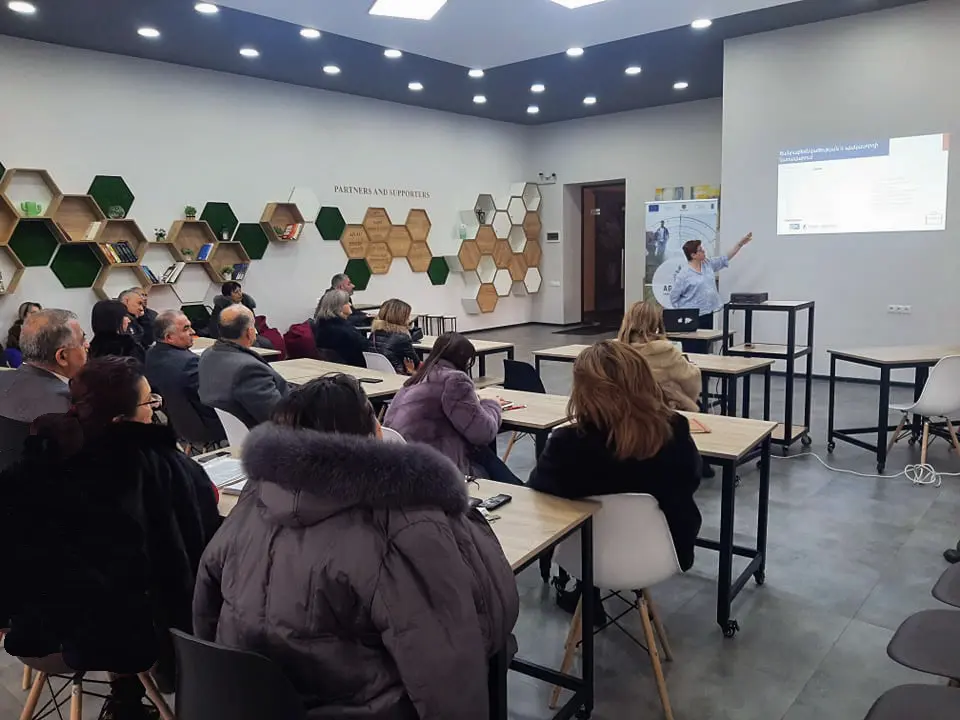
LabCompanion® training in Armenia
LabCompanion® is an open-source software (SaaS) developed by IQLS to simplify and optimize a One Health laboratory network management. It can be used by any country to manage its national laboratory network organization for any type of laboratory (human, vet, food, water, entomology, etc.) LabCompanion® currently offers 4 initial modules to effectively manage training, supervision, equipment, workload, and shortage. To get more information about the software, visit labcompanion.net or contact labcompanion@iqls.net LabCompanion® as GLLP capstone project in Armenia LabCompanion® was presented to key GLLP stakeholders in Armenia, such as the National Center for Disease Control (NCDCP), Especially Dangerous Pathogen (EDP) Vet Lab, Food Safety lab, Tuberculosis (TB) lab, National Center for Infectious Diseases (NCID) and Armenian National Agrarian University (ANAU) to establish commitment to its implementation in the country. A total of 11 key GLLP stakeholders were introduced to the software, and they expressed willingness to implement it in Armenia. The ANAU faculty members showed support to the project and would like to use LabCompanion for the university laboratories. After the successful introduction of LabCompanion® to different stakeholders in the country, IQLS initiated the implementation of the software as part of the GLLP capstone project for pilot testing by selected GLLP participants. During the whole testing time, the participants will be supported by their GLLP mentors. IQLS expert and LabCompanion® technical referent Ms. Zaruhi Davtyan carried out several trainings on its set-up and usage to selected GLLP mentors and participants for further pilot testing in the participating laboratories (NCDCP Reference Lab, NCDCP Shirak branch, NCDCP Syunik branch, EDP Vet Lab, Food Safety lab, TB lab, ANAU). The trainings took place in 3 Armenian cities- Yerevan, Kapan, Gyumri. They were attended by 9 GLLP participants and 7 GLLP mentors, who are now able to employ the software in their laboratories. During the first phases of the implementation, LabCompanion® has received positive feedback from the participants, saying that “It is a useful tool for laboratory network management, and it will optimize administration of various laboratory components as they are managed from a single interface”. The pilot testing is ongoing from January to May 2022. During this year other modules will be developed and added to LabCompanion: national documentation management, biobank management, national EQA panel testing, or inventory management as suggested by Armenian stakeholders.
ISO 9001:2015 certification of zonal public health laboratories in Ghana
The US Centers for Disease Control and Prevention (US CDC) under the Global Health Security Agenda (GHSA) tasked Integrated Quality Laboratory Services (IQLS) with provision of laboratory support to the Ghana public health laboratory system. Improving Quality Management Systems (QMS) was deemed key to improving quality of testing services in zonal public health laboratories (ZPHLs). The ZPHLs (Located in Tamale, Sekondi and Kumasi) are strategically located in Ghana and are responsible for providing microbiology referral testing and other testing services relevant to diseases of public health concern. Since 2013 the ZPHLs have been implementing QMS with limited success. Considering the ground reality, CDC and IQLS decided to implement ISO 9001:2015 as standards for the ZPHLs. In March 2020, IQLS began supporting implementation of ISO 9001:2015 standards in the Sekondi and Tamale ZPHLs . The support started with a baseline audit using a modified WHO Facility Laboratory assessment tool (F-LAT) to build on previous accomplishments. Based on the findings of the F-LAT baseline audit, a list of corrective actions was generated to address the identified gaps. The following activities were undertaken by IQLS, with support of US CDC and AFENET:- Trainings:
- ISO 9001 level 1 training
- ISO 9001 level 2 training
- Internal audit training
- Enrolling into EQA programs
- Establishing equipment maintenance and calibration
- Acquiring reference materials and standards
- Providing remote and onsite technical support
- Supporting internal and external audits
- Trainings:

WHO AMR Proposal won!
We are very happy to announce that the IQLS proposal "Review of microbiological laboratory consumables essential for the diagnosis of antimicrobial resistance (AMR)" has been selected by the WHO! The project will be carried out in 2 parts : · The first step with initial activities will take place from November to 31 December 2021. · The second step involving the rest of the activities will be carried out in 2022. The Technical Referent for this project is Ms. Shruti Malik, collaborating with Ms.Erika Ornelas-Eusebio and Mr. Yiyé A. Nagalo, with Ms. Marie Gouriadec as Project Manager. Within the Surveillance, Evidence and Laboratory Strengthening (SEL) Unit, the Laboratory Strengthening and Integrated Surveillance Team supports countries through the development of tools for fostering microbiological laboratory best practices. An important component of sustainable quality microbiological diagnosis is the maintenance of a stable supply chain that assures good quality laboratory consumables for the microbiological diagnosis and detection of AMR. The mission of our experts will be to define the process for the evaluation of automated and semi-automated blood culture systems and consumables with worldwide distribution and international certification, and develop a list of quality assured consumables for blood culture diagnostics. We wish the team good luck on this new project!
ISO 15189:2012 accreditation of the National Public Health and Reference Laboratory (NPHRL) in Ghana
Since 2019, IQLS experts Mr. Raymond D Fatchu, Mr. Julius Manjengwa and Ms. Beatrice Van De Puije have been working in Accra, Ghana to support the National Public Health and Reference Laboratory (NPHRL) in obtaining its accreditation to the international standard, ISO 15189:2012. The ISO 15189:2012 standard specifies requirements for quality and competence in medical laboratories. To obtain the accreditation, the NPHRL strengthened its human resource capacities for laboratory quality management systems implementation and improved quality assurance of testing services through verified testing method, calibrated and serviced equipment. The ISO 15189 accreditation contributes significantly to enhancing the status of the NPHRL in its role as the reference laboratory in Ghana. The Director Public Health, Dr Franklin Asiedu Bekoe, expressed his contentment about this achievement saying : “You see, I like labs. They form a key part of surveillance. Now that the lab is accredited, I am happy” The NPHRL is now on the KENAS website as one of their accredited medical laboratories. You can download the certificate and the accreditation here : https://kenas.go.ke/cabs/medical-laboratories/ This mission was carried out for the US Centers for Disease Control and Prevention (CDC) under the Global Health Security Agenda (GHSA).
IQLS Poster Presentation at the World Microbe Forum 2021
IQLS International Laboratory Specialist Dr. Shruti Malik is participating in the World Microbe Forum 2021 on behalf of IQLS, and presenting a poster entitled "Strengthening Laboratory Biosafety in Liberia during the COVID-19 pandemic under the Global Laboratory Leadership Programme." The poster addresses the key themes of strengthening laboratory biosafety in Liberia achieved through three national trainings conducted between September 30 – October 22, 2020, training a total of 67 laboratory professionals from all across the country, including participants from human, animal, food safety and environmental laboratories. The overarching goal of the trainings was to deliver a comprehensive package for laboratory biosafety in the context of SARS-Cov-2 covering the entire life cycle of a sample; and equipping the laboratory workforce with the skillset needed to confidently handle the pathogen. The trainings employed a mixture of didactic component; along with practical exercises for risk assessment, hand hygiene, donning & doffing PPE and group discussions to put theory into practice, enabling better retention of concepts. Pre and post tests were organized, showing significant improvement of 34.5% in the performances following the training. The World Microbe Forum 2021 is a joint scientific meeting that unites the microbial sciences community with the leadership of the American Society for Microbiology (ASM) and the Federation of European Microbiological Societies (FEMS), bringing together two of the biggest meetings in the microbial sciences – ASM Microbe 2021 and FEMS2021 – under one digital platform to further science and help answer important questions. The forum is being held from June 20 to 24, 2021 and the poster can be viewed here: https://wmf2021-asm.ipostersessions.com/?s=A3-D3-D6-08-F1-F3-E2-3A-89-B9-E7-3A-B9-96-BF-34

New Languages Available for CDC’s LAARC: French, Spanish, Portuguese
The CDC’s Laboratory Assessment of Antibiotic Resistance Testing Capacity (LAARC) user guide and questionnaire are now available in French, Spanish and Portuguese. LAARC helps laboratories in resource-limited settings identify gaps in testing performance and develop plans to correct key laboratory practices that contribute to inaccurate antibiotic resistance (AR) data. Originally developed in 2017 and piloted in numerous resource-limited settings, LAARC includes a:- User guide to explain proper use of the tool
- Printable questionnaire to facilitate use
- Excel-based scoring tool with multiple languages embedded


IQLS Publishes Manuscript on Laboratory Quality Management Systems in One Health
The IQLS Team has published a manuscript entitled “Quality management system implementation in human and animal laboratories” in One Health, an open access journal for high quality scientific knowledge. The authors from IQLS include Obert Kachuwaire, Arsen Zakaryan, Julius Manjengwa, Zaruhi Davtyan, Jerome Châtard, Arnaud Orelle and Antoine Pierson. How to rapidly detect emerging & re-emerging laboratory threats The manuscript discusses how the ability to rapidly detect emerging and re-emerging threats relies on a strong network of laboratories providing high quality testing services. Improving laboratory quality systems to ensure that these laboratories effectively play their critical role requires using a tailored stepwise approach can assist them to comply with the World Health Organization's (WHO) International Health Regulations (IHRs) and the World Organization for Animal Health's (OIE) guidelines. Find out how this One Health strengthening project ensured simultaneous strengthening of both human and veterinary laboratories, which is not a common approach. To access and download the full manuscript, please visit: https://www.sciencedirect.com/science/article/pii/S2352771421000689
GLLP in South America: IQLS meets officials and conducts assessments in Paraguay
IQLS experts Dr. Erika Ornelas Eusebio and Dr. Arsen Zakaryan participated in high-level meetings with government officials and conducted laboratory system assessments in Paraguay from May 24 to June 3, 2021 as part of the Global Laboratory Leadership Programme (GLLP) in South America. With 25 participants total, representatives present from the Ministry of Health, the Central Laboratory of Public Health, the National Hospital Laboratory, the Pan American Health Organization and the National Service of Quality and Animal Health (SENACSA) were welcoming and eager to introduce GLLP nationally. Mission Objectives The goals of the mission were to:- Hold initial high-level face-to-face meetings with government officials in Paraguay to establish commitment to GLLP
- Perform assessments of human and veterinary laboratory systems in Paraguay using specific tools that were translated into Spanish to identify strengths and weaknesses
- Oversee the initiation and requirements to create a One Health technical working group to coordinate GLLP activities in Paraguay.


IQLS Hosts GLLP Workshop with Joseph Ki-Zerbo University of Ouagadougou
IQLS hosted a workshop with academic leaders from the Health Sciences Training Unit (UFR/SDS), of Joseph Ki-Zerbo University of Ouagadougou in Burkina Faso on June 1, 2021 to discuss strategies for introducing Global Laboratory Leadership Programme (GLLP) modules into the university’s medical laboratory specialist training program (or ‘D.E.S Biologie Clinique’ in French). From IQLS, Laboratory Specialists Dr. Abdoulaye Nikièma and Dr. André Coulibaly helped lead the workshop. In attendance from the university were key heads of departments, professors and lecturers, including: Prof. Jean Sakandé, Coordinator of medical laboratory specialists training; Prof. Rasmata Ouedraogo, Chief of Bacteriology Department; Prof. Elie Kabré, Pedagogical Manager of medical laboratory specialists training; Prof. Idrissa Sanou, Chief of National Hospital Blaise Compaoré Laboratory and Professor of Bacteriology; and Dr. Fabienne Soudre, Lecturer. Proposed Strategies for Introducing GLLP in Medical Laboratory Training During the workshop, the goals, objectives and competency framework of the GLLP were presented, and two complementary strategies were proposed on how to best integrate the GLLP into the training program. The first strategy is to introduce the GLLP into the current 4-year training curriculum for human laboratory specialists, with competencies corresponding to the year of study and seminars organized for each level. Competencies will be considered as free learning units, and be added as a certificate to the diploma of students who participate in the seminars. The second strategy is to create a University Diploma in Laboratory Leadership and Management, which will start in 2023-2024 academic year. A request should be submitted to academic authorities for the official creation and endorsement of a University diploma that will be open to neighboring countries and various sectors specialists (such as veterinary, environmental, etc). About the GLLP: Empowering National Laboratory Systems The Global Laboratory Leadership Programme is a collaboration of six international partner organizations who support the advancement of laboratory systems across the globe. These partners include: the World Health Organization (WHO), the Association of Public Health Laboratories (APHL), Centers for Disease Control and Prevention (CDC), the European Centre for Disease Prevention and Control (ECDC), the Food and Agriculture Organization of the United Nations (FAO), and the World Organization for Animal Health (OIE). They are committed to the vision of laboratory leaders empowering national laboratory systems around the world using a One Health approach to strengthen health security of human, animal, food and water laboratories. For more information, please see the GLLP website at: https://www.who.int/initiatives/global-laboratory-leadership-programme.
GLLP in South America: IQLS Conducts Laboratory Assessments in Ecuador with INSPI and AGROCALIDAD
As part of the implementation of the Global Laboratory Leadership Programme (GLLP) in South America, IQLS Senior Laboratory Specialist Dr. Arsen Zakaryan and Veterinary Laboratory Specialist Dr. Erika Ornelas-Eusebio conducted an assessment of the human and animal health laboratory systems using a One Health approach at the start of May in Ecuador. The assessment was done in collaboration with stakeholders in Ecuador: National Institute for Public Health Research (INSPI) and Agriculture Quality Assurance Agency (AGROCALIDAD), national agencies responsible for public health, animal health and phytosanitary. Teams from both INSPI and AGROCALIDAD were very participative and eager to collaborate within the framework of the GLLP in Ecuador. The two-week work period ended successfully with the final debriefing presentation of the assessment results and the creation of One Health technical Working Group. About the GLLP: Empowering National Laboratory Systems The Global Laboratory Leadership Programme is a collaboration of six international partner organizations who support the advancement of laboratory systems across the globe. These partners include: the World Health Organization (WHO), the Association of Public Health Laboratories (APHL), Centers for Disease Control and Prevention (CDC), the European Centre for Disease Prevention and Control (ECDC), the Food and Agriculture Organization of the United Nations (FAO), and the World Organization for Animal Health (OIE). They are committed to the vision of laboratory leaders empowering national laboratory systems across the globe using a One Health approach to strengthen health security of human, animal, food and water laboratories. For more information, please see the GLLP website at: https://www.who.int/initiatives/global-laboratory-leadership-programme. Also find out more about this mission via INSPI and AGROCALIDAD’s Twitter social media accounts, where they showcased photos and updates of our collaboration: INSPI- First day with IQLS: https://twitter.com/INSPI_ECUADOR/status/1392154515927937033?s=20
- Video from our visit: https://twitter.com/INSPI_ECUADOR/status/1394315450859802625?s=20
- Laboratory visit at Guayaquil: https://twitter.com/INSPI_ECUADOR/status/1392948922499411971?s=20
- Debriefing: https://twitter.com/INSPI_ECUADOR/status/1395806699647295489?s=20 and https://twitter.com/INSPI_ECUADOR/status/1395768711697604618?s=20 and https://twitter.com/INSPI_ECUADOR/status/1395765592594997253?s=20
- Tweet stating the creation of the working group: https://twitter.com/AgrocalidadEC/status/1395801104936574982?s=20
- Debriefing session: https://twitter.com/AgrocalidadEC/status/1395759578097324037?s=20
- Finalizing the working week: https://twitter.com/AgrocalidadEC/status/1395172181001310210?s=20
- Laboratory visit: https://twitter.com/AgrocalidadEC/status/1395141476623998982?s=20
- Working week: https://twitter.com/AgrocalidadEC/status/1394789693754064905?s=20


Global Laboratory Leadership Programme (GLLP) Launches in Burkina Faso
IQLS Chief Scientific Officer Dr. Antoine Pierson along with Burkina Faso’s Minister of the Environment, Economy and Climate Change Siméon Sawadogo led the launch of the Global Laboratory Leadership Programme (GLLP) in Burkina Faso at a meeting held on April 2, 2021. From IQLS Africa, Senior Laboratory Specialist Dr. Abdoulaye Nikiéma, National Laboratory Specialist Dr. André Coulibaly, Laboratory Specialist Yiyé Nagalo, Project Coordinator Aïda Barro and Administrative & Logistics Assistant Yasmina Triandé were present on-site to participate in and manage the organization of the two-day meeting to ensure a successful outcome. Purpose & Participants This first meeting served to strengthen collaboration between the different stakeholders for the effective implementation of the program as well as to validate the terms of reference for the GLLP Burkina Faso Technical Working Group. In attendance were 34 attendees from key public and private agencies and institutions, including representatives from:- WHO
- CDC
- FAO
- IDDS/USAID
- Heads and directors of laboratories from different sectors
- University teachers and researchers


©2010 - 2026 IQLS - Integrated Quality Laboratory Services. All Rights Reserved. If you are not part of the solution, you are part of the problem.