Date: April – September 2026
Country : Madagascar
IQLS was selected by the World Organisation for Animal Health (WOAH) to provide technical assistance to Madagascar in strengthening biological risk management across its veterinary laboratory network between April and September 2026. The project is implemented under WOAH’s FIRABioT initiative (Fortifying Institutional Resilience Against Biological Threats), which aims to strengthen countries’ resilience and prevent accidental and deliberate biological threats. This activity is funded by Global Affairs Canada’s Weapons Threat Reduction Program.
Although Madagascar validated a One Health National Manual on Laboratory Safety, Biosafety and Biosecurity in January 2026, the manual did not sufficiently address the specific needs of veterinary laboratories.Working closely with Madagascar’s Directorate of Veterinary Services, the National Veterinary Diagnostic Laboratory (LNDV), other veterinary laboratories and WOAH, IQLS led laboratory biological risk assessments, capacity building, stakeholder consultation, and the development of national biosafety and biosecurity manual. The participatory approach was designed to ensure that national stakeholders actively contribute to the development of the framework, strengthening ownership and sustainability.
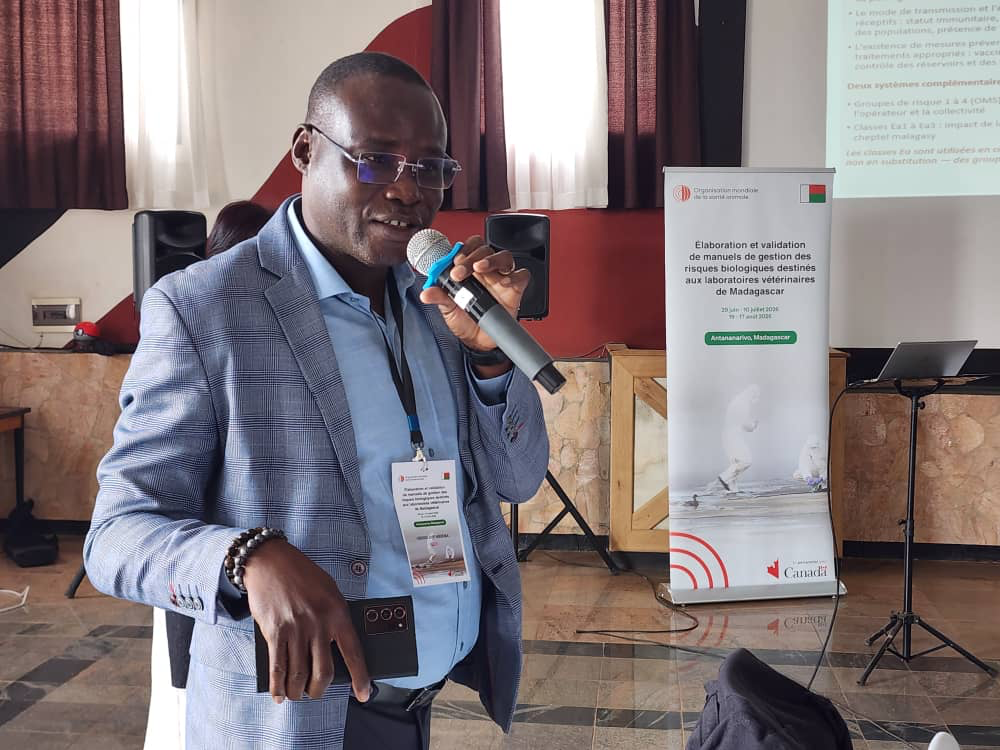
Firstly, IQLS updated its safety, biosafety and biosecurity (SBS) assessment tool, already used in more than 15 countries, to fit the context. National specialists were trained to use the tool and carried out self-assessments of their laboratories in June 2026. IQLS experts, WOAH and the national teams then conducted external assessments of four veterinary laboratories: LNDV, the Department of Zootechnical, Veterinary and Fish Research (DRZVP/FOFIFA), the private Mahaliana laboratory and the laboratory of the Department of Veterinary Science and Medicine (DESMV) of the University of Antananarivo. The DESMV assessment was led by the newly trained national assessors themselves. The assessments showed that many good practices already exist and can be shared, and that most of the required improvements concern organisation, documentation and training rather than significant investment. Several no-cost improvements were made on the spot. Madagascar now has a national team of veterinary SBS assessors able to assess other laboratories, including regional laboratories once operational, and to train their colleagues.
IQLS subsequently facilitated a five-day drafting workshop in July 2026 through which Malagasy specialists from national and regional veterinary services and laboratories revised the veterinary laboratory chapter of the national manual and drafted the outlines of their laboratory-specific manuals. The draft was then refined by a national editorial team with remote support from IQLS, and reviewed by 15 international experts in biosafety and biosecurity.
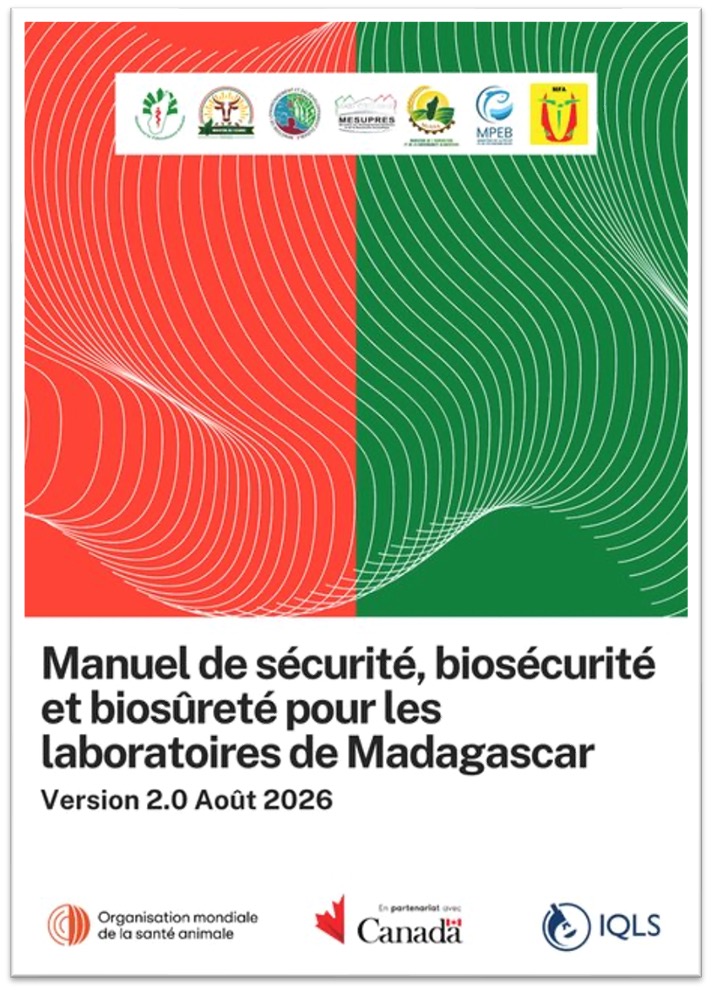
In August 2026, Madagascar nationally validated the veterinary laboratory component of its National Manual for Laboratory Security, Biosafety and Biosecurity, marking a major milestone toward harmonized biological risk management practices across the country’s veterinary laboratory network. Read the full article on WOAH website
As a next step, the participating laboratories are finalising their own laboratory-specific biological risk management manuals, adapted to their risks and operational context, with remote technical review by IQLS. The official signature and launch of the national manual, its dissemination to all public and private veterinary laboratories, and regular monitoring using the assessment tool will be key to turning these achievements into lasting improvements in biosafety and biosecurity.